

Introduction
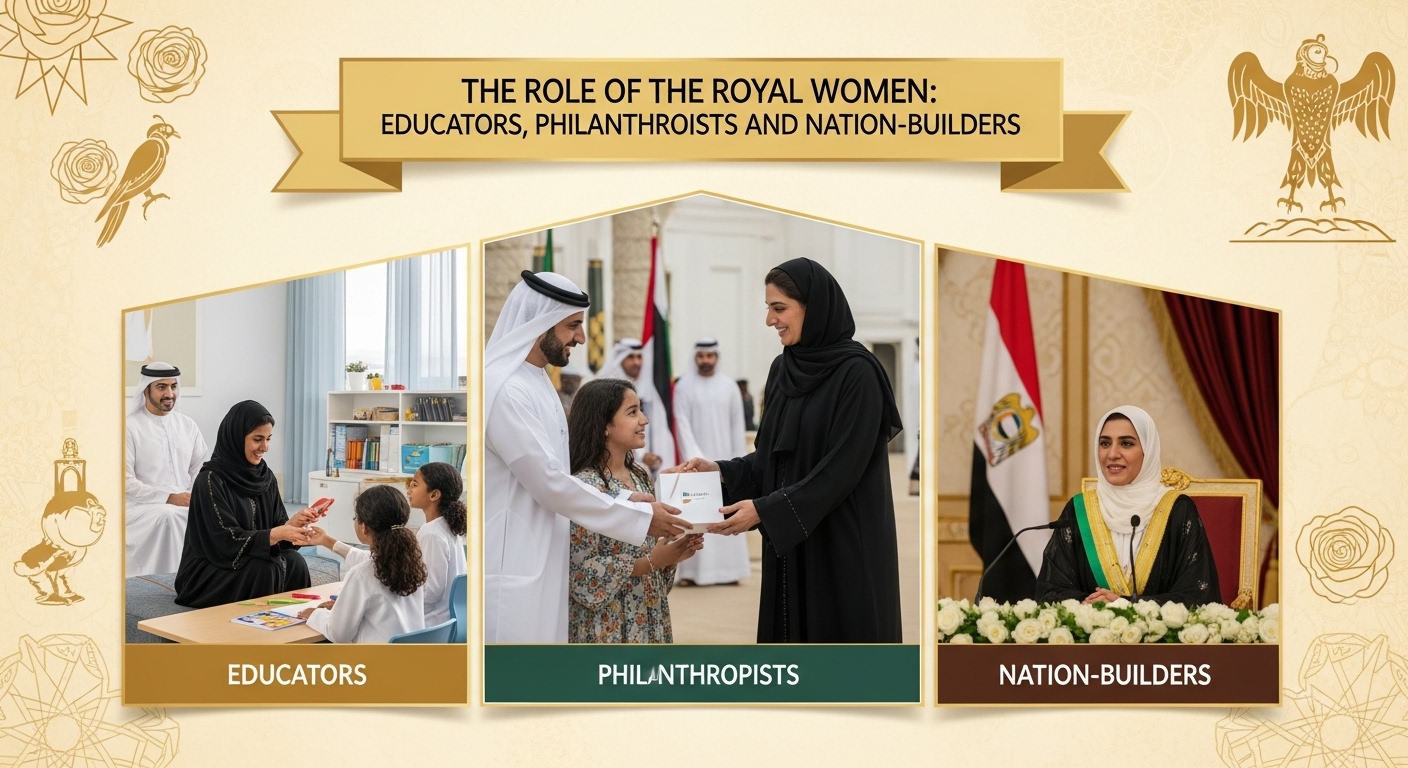
While the narrative of the UAE’s formation often highlights the visionary roles of its male leaders, the contributions of the women within the royal families have been equally profound, though often less publicized. From the fortitude of the Bedouin matriarchs to the modern, transformative work of royal figures like Sheikha Fatima bint Mubarak and Sheikha Lubna Al Qasimi, royal women have been the quiet architects of social progress. Acting as educators, philanthropists, and nation-builders, they have played a pivotal role in shaping the UAE’s social fabric, championing women’s empowerment, and ensuring that the nation’s development is both inclusive and sustainable.
History
In the pre-oil era, royal women, like all women, were the backbone of the household and the custodians of cultural knowledge, skills like Al Sadu weaving, and oral traditions. They provided stability and continuity while men were at sea pearling or trading. With the advent of the union and oil wealth, a new generation of royal women emerged as powerful agents of change. Sheikha Fatima bint Mubarak, the wife of Sheikh Zayed, famously known as the “Mother of the Nation,” was at the forefront. In the 1970s, when female education was still a novel concept for many, she was a driving force behind its promotion, understanding that educating girls was fundamental to national progress.
Key Features
The impact of royal women is felt across several key domains:
- Champions of Education and Health: Sheikha Fatima established the UAE’s first women’s society and countless educational and healthcare initiatives. Her patronage was instrumental in normalizing and encouraging female participation in all levels of education, from primary school to university.
- Pioneers in Public Service: Royal women broke barriers by entering public life. Sheikha Lubna Al Qasimi became the UAE’s first female minister, serving as Minister of Economy and later Minister of State for Tolerance, setting a powerful example for all Emirati women.
- Philanthropy and Social Welfare: Through their foundations and patronage, royal women address critical social issues, from supporting people of determination to providing aid for low-income families and orphans, extending the traditional Bedouin value of generosity into organized, modern philanthropy.
- Cultural Patronage: They are leading patrons of the arts, heritage, and literature, establishing museums, supporting artists, and preserving traditional crafts, ensuring that rapid modernization does not come at the cost of cultural erosion.
Cultural Significance
The public roles of royal women have provided a powerful model for the emancipation and empowerment of all Emirati women. By visibly leading major organizations, serving in government, and driving social change, they have redefined what is possible for women in the UAE. They have skillfully navigated the intersection of tradition and modernity, demonstrating that one can be a proud, traditional Emirati woman while also being a CEO, a minister, or a scientist. Their work has legitimized the ambitions of countless young women, showing that their contributions are not just welcome, but essential to the nation’s success.
Modern Relevance
The legacy of these pioneering royal women is the highly educated and increasingly influential female population of the UAE today. Emirati women now outnumber men in higher education and are making significant strides in fields like space science, military service, and entrepreneurship. The UAE’s Gender Balance Council and its strong stance on women’s rights are a direct continuation of the path forged by its royal matriarchs. In the international arena, the UAE frequently fields female diplomats and has appointed female ambassadors, a testament to the successful integration of women into the highest echelons of leadership, a project initiated and championed by its royal women.
Conclusion
The role of the royal women in the UAE is a story of quiet power and transformative influence. They have been the moral and social conscience of the nation’s development, ensuring that progress is measured not just in economic growth, but in human development and social equity. From the tents of the desert to the halls of government, they have been indispensable partners in nation-building. Their enduring legacy is a more inclusive, educated, and compassionate UAE, proving that the nation’s strength truly lies in the empowered contributions of all its citizens, regardless of gender.