

Introduction
The sophisticated governance model of the modern UAE, with its federal structure and global ambitions, may seem a world away from the simple, nomadic life of the desert. Yet, a closer examination reveals that the bedrock of its political stability and leadership style is deeply embedded in ancient Bedouin traditions. The principles of consensus, accessibility, and meritocracy that defined tribal life for centuries have been seamlessly integrated into a modern state framework. Understanding these Bedouin roots is essential to comprehending the unique social contract between the rulers and the ruled in the UAE, a relationship built on mutual respect and a shared historical identity.
History
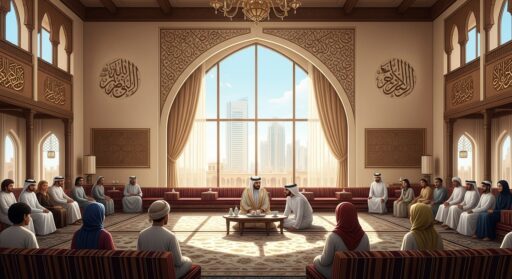
For millennia, survival in the harsh desert environment of the Arabian Peninsula depended on a highly refined social and political system. Bedouin tribes were led by a sheikh—not an absolute monarch, but a “first among equals.” His authority was not inherited by divine right but earned through demonstrated wisdom, courage, and generosity. The tribe’s affairs were managed through consultation and consensus in the majlis, a democratic forum where every adult male had the right to speak. This system ensured that leadership remained accountable and in touch with the needs of the community, as the survival of all depended on wise and collective decision-making.
Key Features
Several key Bedouin traditions continue to shape modern Emirati governance:
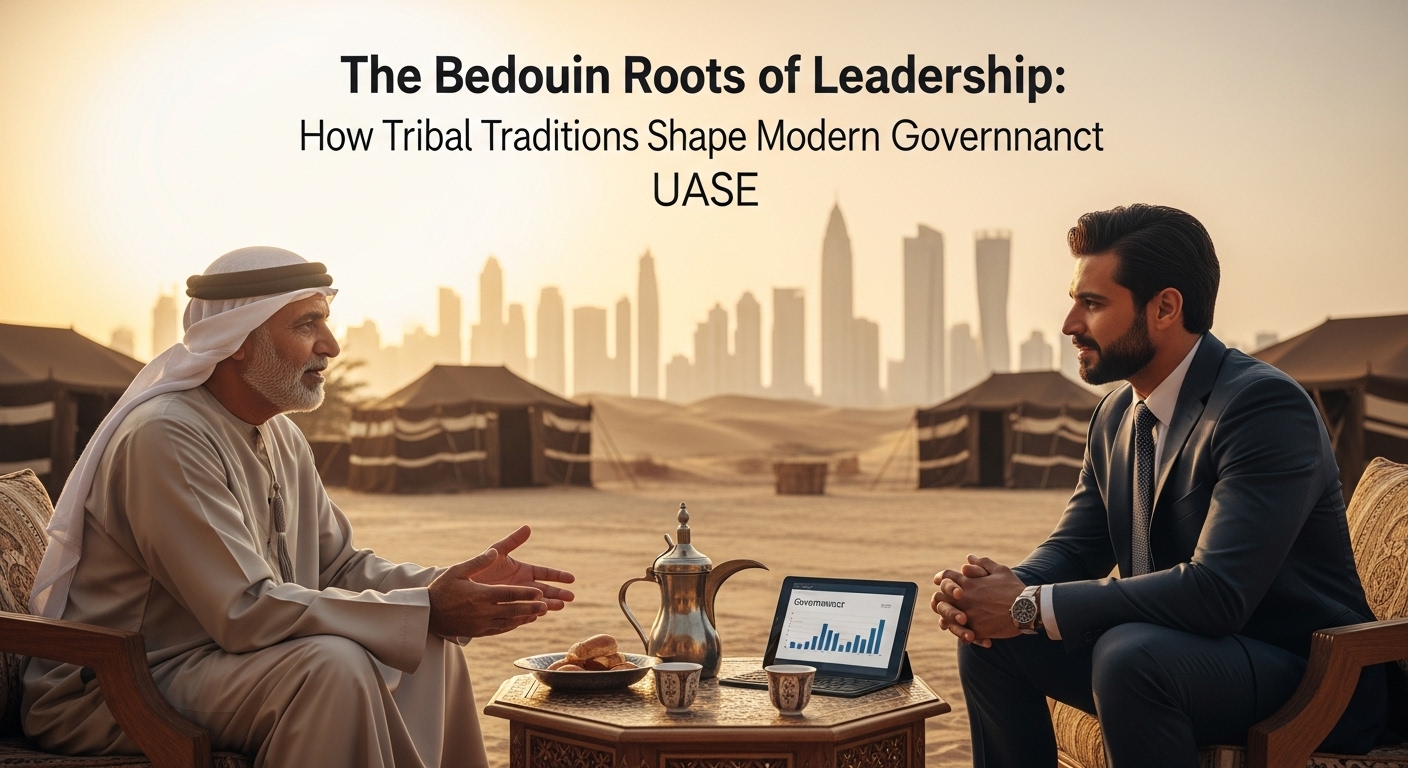
- The Majlis System: The most direct lineage is the majlis. Today, the rulers of the emirates, most notably the President and the Vice President, continue to hold regular open majlis sessions. This tradition ensures that leaders remain accessible to their citizens, hearing their concerns and requests directly, maintaining the ancient bond of connection and accountability.
- Shura (Consultation): The Bedouin practice of shura is codified in the UAE’s Federal Supreme Council, the highest executive body comprising the rulers of the seven emirates. Major decisions are made through deliberation and consensus, mirroring the way tribal elders would confer.
- Meritocratic Leadership: The Bedouin concept of the most capable leader persists. While leadership remains within the ruling families, the individual who ascends to a position of authority is typically one who has demonstrated the competence, vision, and character worthy of the role, much like the desert sheikh.
- The Social Contract of Provision: In the desert, a leader was expected to be generous and provide for his people. This has translated into the modern welfare state, where the government provides citizens with housing, education, healthcare, and employment, a contemporary fulfillment of the tribal leader’s duty.
Cultural Significance
These traditions provide the UAE’s rapid modernization with a crucial element of cultural continuity. They prevent the government from becoming a distant, impersonal bureaucracy. The open majlis is a powerful symbol that the ruler is a servant of the people, a concept that fosters immense loyalty and social cohesion. This style of governance reinforces a shared cultural identity, reminding citizens that despite the glittering skyscrapers, their leaders are bound to them by the same ancient codes of honor and mutual obligation that sustained their ancestors in the desert.
Modern Relevance
In a region often plagued by political instability, the UAE’s model of governance, rooted in these time-tested traditions, has been a key factor in its remarkable stability. The majlis system acts as a vital feedback loop, allowing the leadership to gauge public sentiment and address issues before they escalate. The emphasis on consensus and consultation ensures that policies have broad support and are sustainable. Furthermore, this model has proven to be adaptable. The same principle of shura that guided desert elders now guides the UAE’s approach to global diplomacy and economic planning, proving that these ancient values are not outdated relics but dynamic tools for navigating a complex world.
Conclusion
The skyscrapers of Dubai and Abu Dhabi may reach for the stars, but their foundations are firmly planted in the sands of the desert. The Bedouin roots of leadership are the invisible architecture of the UAE’s success story. They have provided a stable, culturally authentic, and deeply respected framework for governance that has enabled breathtaking progress without social fracture. The UAE demonstrates that tradition and modernity are not opposing forces; rather, the wisdom of the past, when understood and adapted, can be the most powerful engine for building a prosperous and cohesive future.